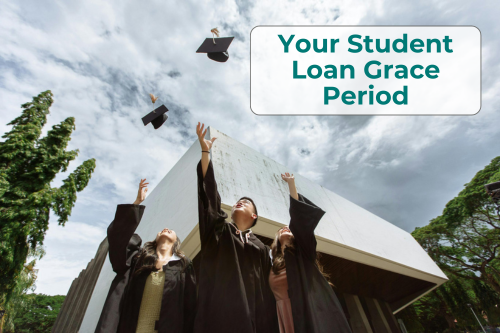
If you graduated from college this spring, congratulations! Along with your diploma comes a financial transition: your student loan grace period has started. This window before your first payment is due is a valuable planning period, not just a break from thinking about loans. Here is what you need to know.
How Federal Student Loan Grace Periods Work
Federal Direct Subsidized and Unsubsidized Loans typically provide a six-month grace period after you graduate, leave school, or drop below half-time enrollment. During this time:
- No payments are required
- Interest does not accrue on subsidized loans during the grace period
- Interest does accrue on unsubsidized loans, and it will be added to your principal (capitalized) when repayment begins
Note that not all federal loans follow the same grace period rules. Parent PLUS loans, for example, enter repayment after full disbursement, though borrowers can request a deferment while the student is in school and for six months after. Check with your loan servicer for the specific terms that apply to your loans.
How Private Student Loan Grace Periods Work
Private student loans have grace periods that vary by lender. Some offer six months, some offer three, and some require payments while you are still in school. Review your loan agreement or contact your lender to confirm:
- The length of your grace period
- Whether interest accrues during the grace period
- When your first payment is due
- Whether you can make voluntary payments during the grace period without penalty
What to Do During Your Grace Period
1. Know What You Owe
Log in to studentaid.gov to see your federal loan balances, servicer information, and estimated monthly payments. For private loans, check each lender’s portal or contact them directly. Get a complete picture of:
- Total balance for each loan
- Interest rate on each loan
- Monthly payment amount once repayment begins
- First payment due date
2. Choose Your Federal Repayment Plan
Federal loans offer several repayment plan options:
- Standard Repayment: Fixed payments over 10 years (the default repayment term)
- Graduated Repayment: Payments start lower and increase every two years
- Extended Repayment: Lower payments stretched over up to 25 years (available if you owe more than $30,000 in Direct Loans)
- Income-Driven Repayment (IDR) Plans: Payments based on your income and family size
If you do not choose a plan, you will be placed on the Standard Plan by default. Compare options using your federal loan servicer’s online tools before your grace period ends.
3. Set Up Autopay
Setting up automatic payments through your loan servicer can help you avoid missed payments and, in some cases, qualify for a rate reduction. Many servicers offer a 0.25% interest rate discount for enrolling in autopay.
4. Consider Making Interest Payments Now
If you can afford it, making interest payments during your grace period can reduce the amount of interest that is capitalized (added to your loan principal). This is especially relevant for unsubsidized federal loans and private loans where interest accrues during the grace period.
Even small payments can make a difference. If you have $30,000 in unsubsidized loans at 6.52%, about $163 in interest accrues each month. Paying that monthly interest during your six-month grace period would keep approximately $978 in accrued interest from being capitalized and added to your principal.
5. Evaluate Refinancing After You Are Established
You do not need to refinance immediately after graduation. But once you have steady income and a clearer picture of your financial situation, evaluating whether refinancing makes sense is worth your time.1
Key factors to consider:
- Your current interest rates compared to what you might qualify for with a private lender
- Whether you are using or plan to use any federal loan benefits (income-driven repayment, Public Service Loan Forgiveness)
- Your credit profile and whether a strong credit score could qualify you for a lower rate
6. Update Your Contact Information
Make sure your loan servicer has your current address, email, and phone number. Missed communications about repayment can lead to missed payments, which can affect your credit.
What Happens If You Go Back to School
If you enroll at least half-time in an eligible program, most federal loans re-enter deferment. Private loans may also offer in-school deferment, but check with your lender. Be aware that if you used part of your grace period and then return to school, you may not get a full grace period when you leave again.
Make the Most of This Window
Your grace period is a planning period. Use it to understand your loans, set up your repayment strategy, and build the financial habits that will serve you through the years of repayment ahead. The decisions you make now, from your repayment plan to whether you pay interest during the grace period, can save you money over the life of your loans.
1Remember that by refinancing federal student loans, you will lose certain borrower benefits from your original loans. These may include interest rate discount, principal rebates, or some cancellation/forgiveness benefits that can significantly reduce the cost of repaying your loans. Please consider these benefits carefully when considering your options for refinancing federal student loans.
*Important: Please remember that federal loans do offer certain benefits and protections that do not transfer to a private loan. By refinancing your federal student loans to a private loan you will lose any federal benefits that may apply to you. Please review this important disclosure for more information.
Loans subject to credit approval and additional criteria. Carefully consider whether consolidating your existing student loan debt is the right choice for you. Any reduction in your monthly payment may result from a lower interest rate, a longer repayment term, or both. Extending the loan term could increase the total interest paid over time.